Fourth of July Color by Number
Free Fourth of July color by number worksheets. Solve addition facts to 18, color each square by its answer, and choose from ten Fourth of July pictures.
Choose a picture
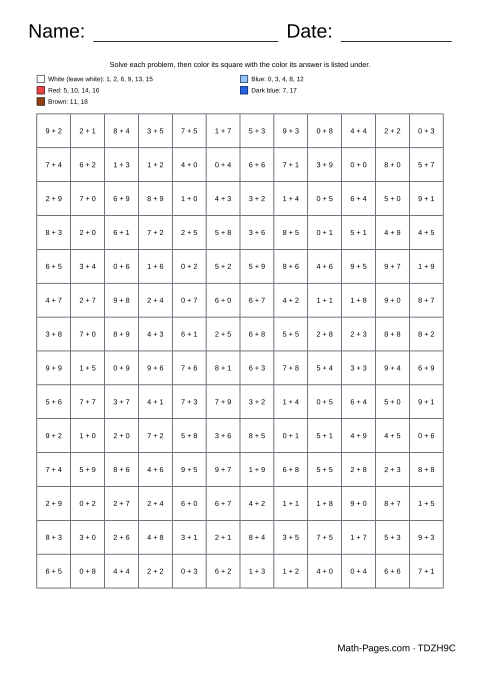
Solve the sums, color the squares, and a Fourth of July picture appears. There are ten Fourth of July pictures to choose from, shown finished in the gallery above the sheet, so you can see what the sheet will make before you print. Every square holds an addition fact with a sum up to 18, and a key at the top lists which answers get which color.
Fourth of July sheets are mostly printed for the weeks around Independence Day: summer packets, camp tables, and the last days of school in places that run late. A single page of addition practice with a picture at the end is easy to send home.
The key lists exact answers rather than ranges, so each square has to be worked out, not guessed, and no answer belongs to two colors. Each print deals a fresh set of problems into the picture you chose. Set Pages for a stack of different sheets, and tick Answer key to get the finished, colored-in Fourth of July picture with every answer written in its square.
What this worksheet covers
- Solve addition facts with sums to 18 in a Fourth of July picture
- Match each answer to its color in the key
Common Core standards
- 1.OA.C.6 Add and subtract within 20, fluently within 10.
Frequently asked questions
Which pictures are in the Fourth of July set?
There are ten Fourth of July pictures, shown finished in the gallery above the worksheet. Click one to choose it and the sheet below changes to that picture. The Picture list in the settings offers the same ten, among every other holiday's.
Will this work for a summer packet or a Fourth of July camp table?
Yes. Each sheet is one page, with the key and the picture's 168 squares on it, so it slips into a packet without extra instructions. The Fourth of July pictures are in the gallery above the sheet so you can pick before you print.
How do I make a Fourth of July sheet easier or harder?
Change First number and Second number. Smaller numbers, such as 0 to 5, give a Fourth of July sheet that suits early learners; the full 0 to 9 gives sums up to 18. The picture stays the same and the problems change.