Tens and Ones
Free printable tens and ones place value worksheets for 1st grade. Two-digit numbers in expanded and standard form, with an answer key.
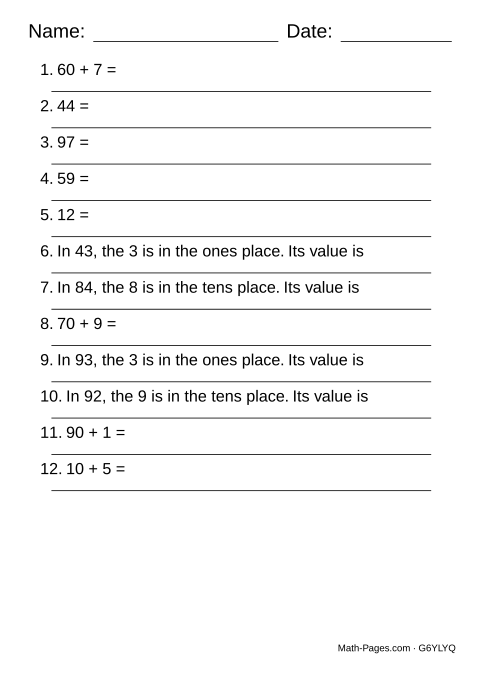
Place value starts with two digits: 47 is four tens and seven ones. Every number on these sheets is between 10 and 99, and the questions move between the digit in a place, the value of that digit, and the number written out as tens plus ones.
First grade builds this up with bundles of ten sticks; the sheets are the written half of the same idea. Hundreds, Tens and Ones is the three-digit version that follows in second grade.
What this worksheet covers
- Name the tens digit and the ones digit in a two-digit number
- Write a two-digit number as tens plus ones
Common Core standards
- 1.NBT.B.2 Understand that the two digits of a two-digit number stand for tens and ones.
Frequently asked questions
What is the difference between a digit and its value?
In 47 the digit 4 is in the tens place, and its value is 40. The sheets ask both ways, because children often know one without the other.
What grade is this?
First grade, where two-digit place value is introduced, with a return to it early in second grade.
What does a zero in the ones place mean?
That there are no ones left over. 40 is four tens and zero ones, and the zero has to be written or the number would read as 4. It is the first place-value idea that trips children up.
What kinds of question are on the sheet?
Three, mixed together: writing a number as tens plus ones (28 = 20 + 8), putting the two parts back together (60 + 1 = 61), and giving the value of one digit (in 41, the 4 is worth 40). About two questions in three are the first two kinds.
Can I practise just one kind of question?
Yes. Change the question type in the settings from Mixed to Expanded Form, Standard Form or Digit Value, and the whole sheet asks that one thing about two-digit numbers.