Multiples Worksheets
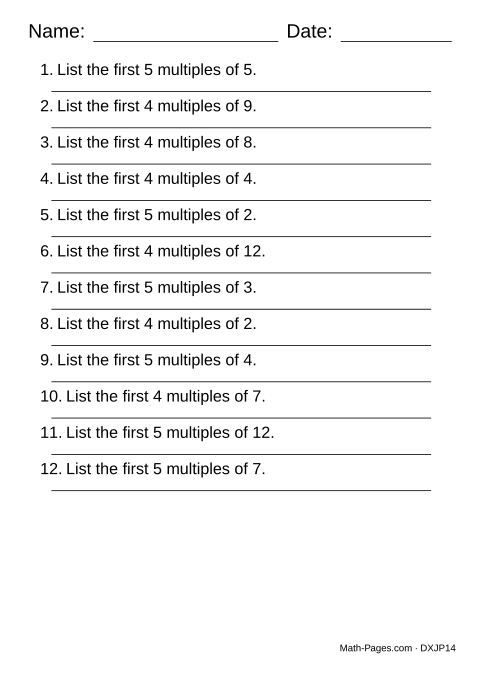
Free printable multiples worksheets. List the first four or five multiples of a number, with an answer key. Skip counting made explicit.
Each question asks for the first four or five multiples of a number: the first five multiples of 6 are 6, 12, 18, 24 and 30. The count is stated in the question, so a student always knows when to stop.
Multiples are skip counting with the name it gets later. A student who can count by sixes can already answer these; what changes is the vocabulary, and that vocabulary is what fifth and sixth grade use when they start finding common multiples of two numbers.
What this worksheet covers
- List the first multiples of a number
- Skip count by the number to find its multiples
Common Core standards
- 4.OA.B.4 Find factor pairs and multiples of whole numbers to 100, and tell prime from composite.
Frequently asked questions
What is a multiple?
The result of multiplying a number by a whole number. The multiples of 6 are 6, 12, 18, 24 and so on - what you say when you count by sixes.
What is the difference between a factor and a multiple?
Factors divide into a number; multiples are what it divides into. 6 is a factor of 24, and 24 is a multiple of 6. The two words describe the same relationship from opposite ends, which is why they are taught together.
Does the list start at the number itself?
Yes. The first multiple of 7 is 7, not 14. Some textbooks count zero as a multiple as well; these sheets start at the number, which is the common convention in elementary work.
What grade is this?
Fourth grade, and again in fifth and sixth when least common multiples arrive.