Telling Time to the Minute
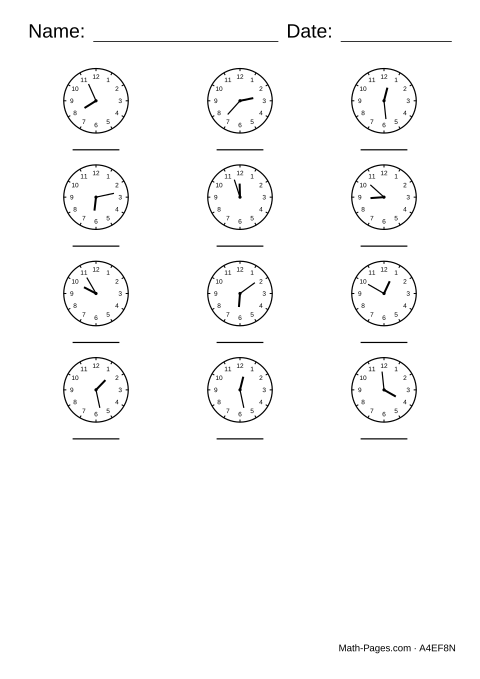
Free printable telling time to the minute worksheets. Read analog clocks where the minute hand lands anywhere, with an answer key.
The minute hand lands on any of the sixty marks, not just the twelve numbers, so a student cannot count round in fives - they have to read the nearest number and then count on. This is the last step in telling time, and the one that needs the most practice.
The hour hand matters here too: at 3:58 it is almost touching the 4, and a student who reads it as 4 has the hour wrong by an hour. Twelve clocks to a page; drop to nine or six to make them larger.
What this worksheet covers
- Read the time to the nearest minute
- Count on from the nearest five-minute mark
Common Core standards
- 3.MD.A.1 Tell time to the nearest minute and solve problems about time intervals in minutes.
Frequently asked questions
What grade is telling time to the minute?
Third grade in most curricula, after telling time to five minutes is comfortable.
Why is reading to the minute harder?
The minute hand no longer points at a number you can name directly. You read the nearest number, then count the extra marks - and you have to watch the hour hand, which by now is sitting very close to the next hour.
How is this different from the five-minute page?
On the five-minute page every time ends in 00, 05, 10 and so on. Here a time can be 7:23 or 11:48, so the minute hand sits between the numbers.
How many minutes is each small mark?
One. There are five marks from each number to the next, and sixty all the way around. Count on from the last number the minute hand passed: three marks past the 4 is 23 minutes.