Double Digit Multiplication
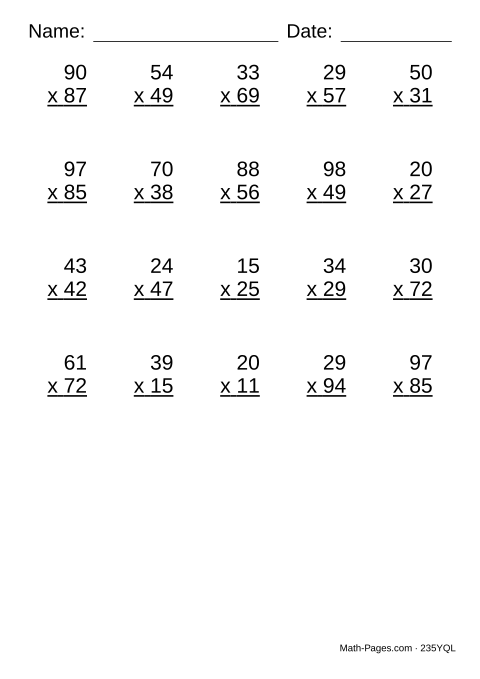
Free printable double digit multiplication worksheets. Two-digit by two-digit problems in column format, with an optional answer key.
Two-digit by two-digit multiplication, laid out in columns with room for the partial products underneath. Both numbers run from 10 to 99, so every problem needs the full standard algorithm rather than a fact a student might already know.
This is where the place-value zero in the second partial product goes missing, and it shows up as a consistent, wrong-by-a-factor-of-ten answer rather than random errors. Turn the answer key on and that pattern is quick to spot across a page.
What this worksheet covers
- Multiply two two-digit numbers
- Find and add the two partial products
Common Core standards
- 4.NBT.B.5 Multiply up to four digits by one digit, and two two-digit numbers.
Frequently asked questions
What grade is double digit multiplication?
Usually introduced in fourth grade and expected to be fluent by the end of fifth.
Can I get two-digit by one-digit problems instead?
Yes - set Digits to 1 for the second number and the first stays at two digits.
How many problems should be on a page?
Twenty is the default here because each problem takes several lines of working. Half Page cuts that to a sheet a student can finish quickly.
What are partial products?
The rows you add at the end. In 47 x 36, the first row is 47 x 6 = 282 and the second is 47 x 30 = 1,410. Adding them gives 1,692. Each row is one digit of the bottom number multiplied by the whole top number.